The SHARP Loop: A Decision Framework for When Conditions Keep Changing
A plan can be right today and wrong tomorrow. The problem isn't the uncertainty. It's not knowing which observable conditions should change your plan.
A plan can be right today and wrong tomorrow. Simply because conditions changed.
The problem isn't the uncertainty. It's not knowing which observable conditions should change your plan.
Without that definition, leaders react too quickly: constantly revisiting the decision, flip-flopping back and forth, repeatedly having to defend it to a team or board that keeps questioning it.
Moving from a feeling to something observable is what lets you and your team focus on executing today.
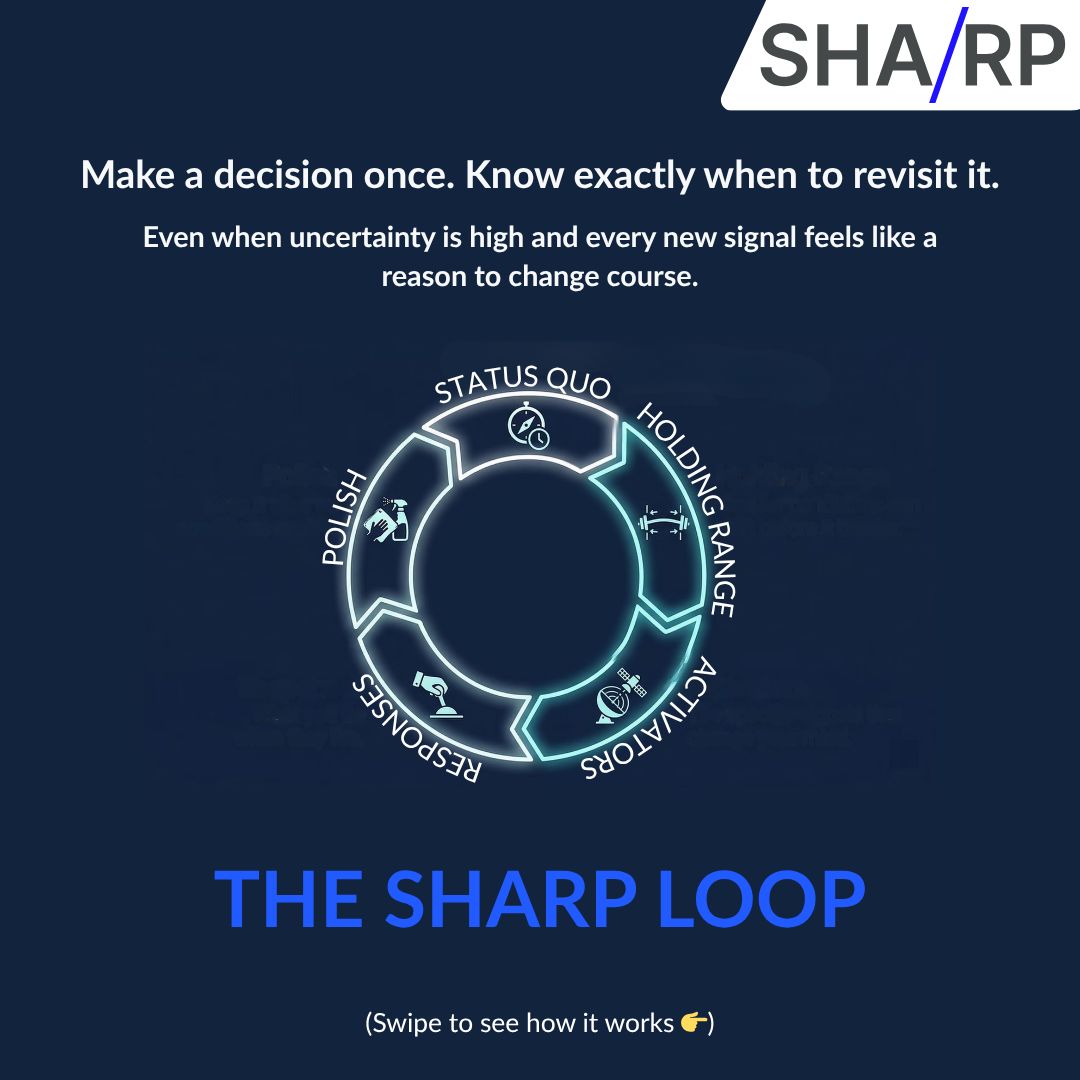
That's what the SHARP Loop is built for: decisions made under high uncertainty, where conditions keep moving. Five steps, broken down below.
- S: the status quo you are operating under, and the environment that makes it right.
- H: the holding range, or how far conditions can shift before the plan breaks.
- A: the activators, written as conditions anyone can check.
- R: the responses, pre-decided before the signal lands.
- P: the polish, for when reality moves past the loop.
S is for Status Quo
A $1M enterprise deal, unsigned. The team already adjusting the roadmap around it.
In meetings. In sprint assumptions. Before a PO was signed. Before anything was confirmed.
No bad intent. Nobody had written what environment the current plan was designed for. So the deal started steering everything.
Every new signal became a reason to restart the debate. Nobody was wrong. There was just nothing to hold the decision.
High motion. Zero convergence.
Before anything else, one question.
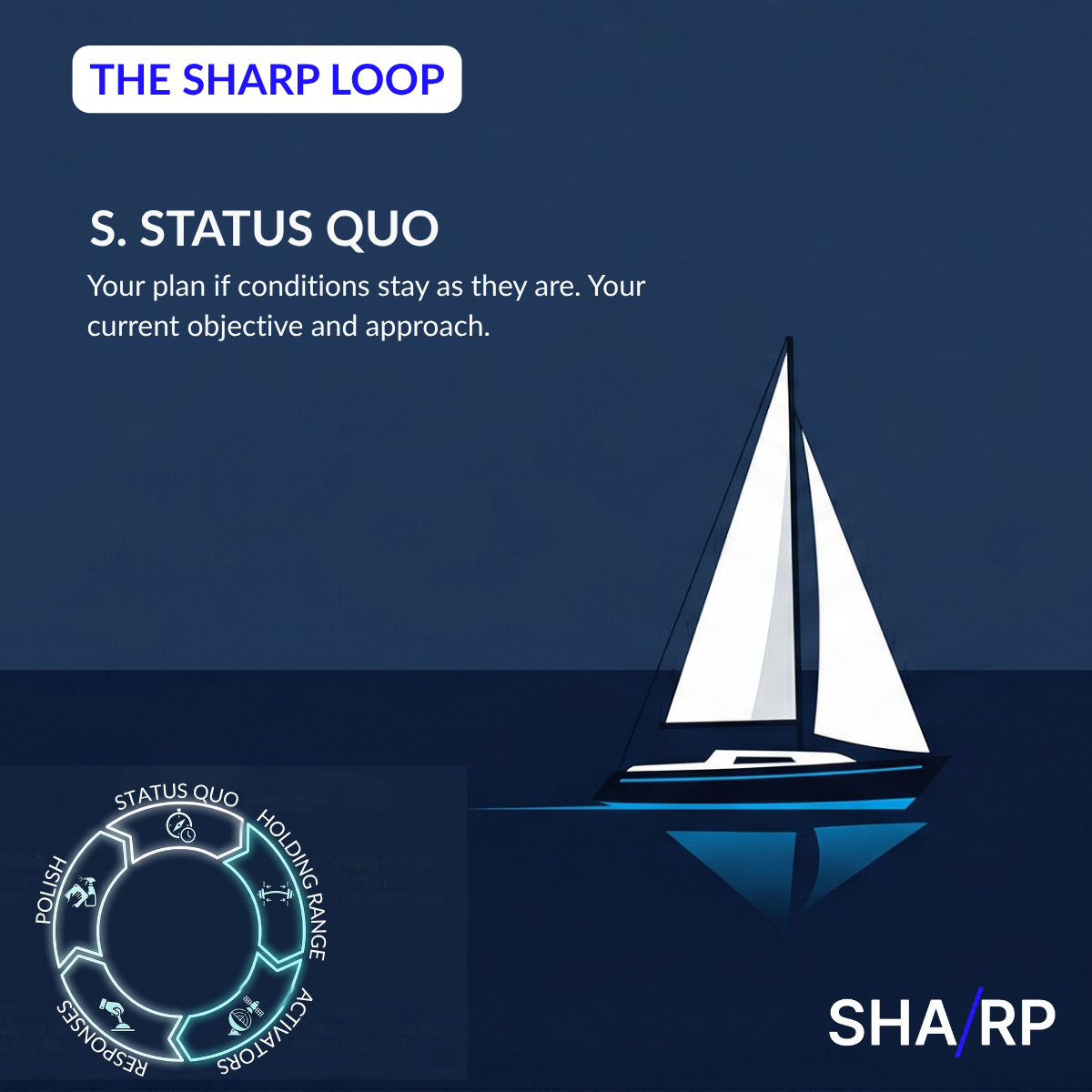
S: how are you currently operating, and what environment makes that model right?
Not goals. Not pipeline. Confirmed current conditions. One sentence.
Write it. Without it, there's nothing to update against. The signals update the plan for you.
H is for Holding Range
Most founders can answer "what's the plan?"
Almost none can answer "what would change it?"
Series B. 18 months post-raise. 22 people. Three product bets. The team is in motion: standups, syncs, OKRs, retros. Revenue is flat.
The founder walked through the go-to-market. Clear logic. Solid slides.
Then the question: what would make you change this plan?
Long pause.
We'd need to see some signal from the market.
What signal specifically?
Another pause.
That pause is the problem.
The plan had no edges. Nothing defined what would change it. So everything did. Investor pushback, a competitor move, a churn spike: every signal was a valid reason to reopen the debate.
The team wasn't weak. They just had no criteria for when to stop.
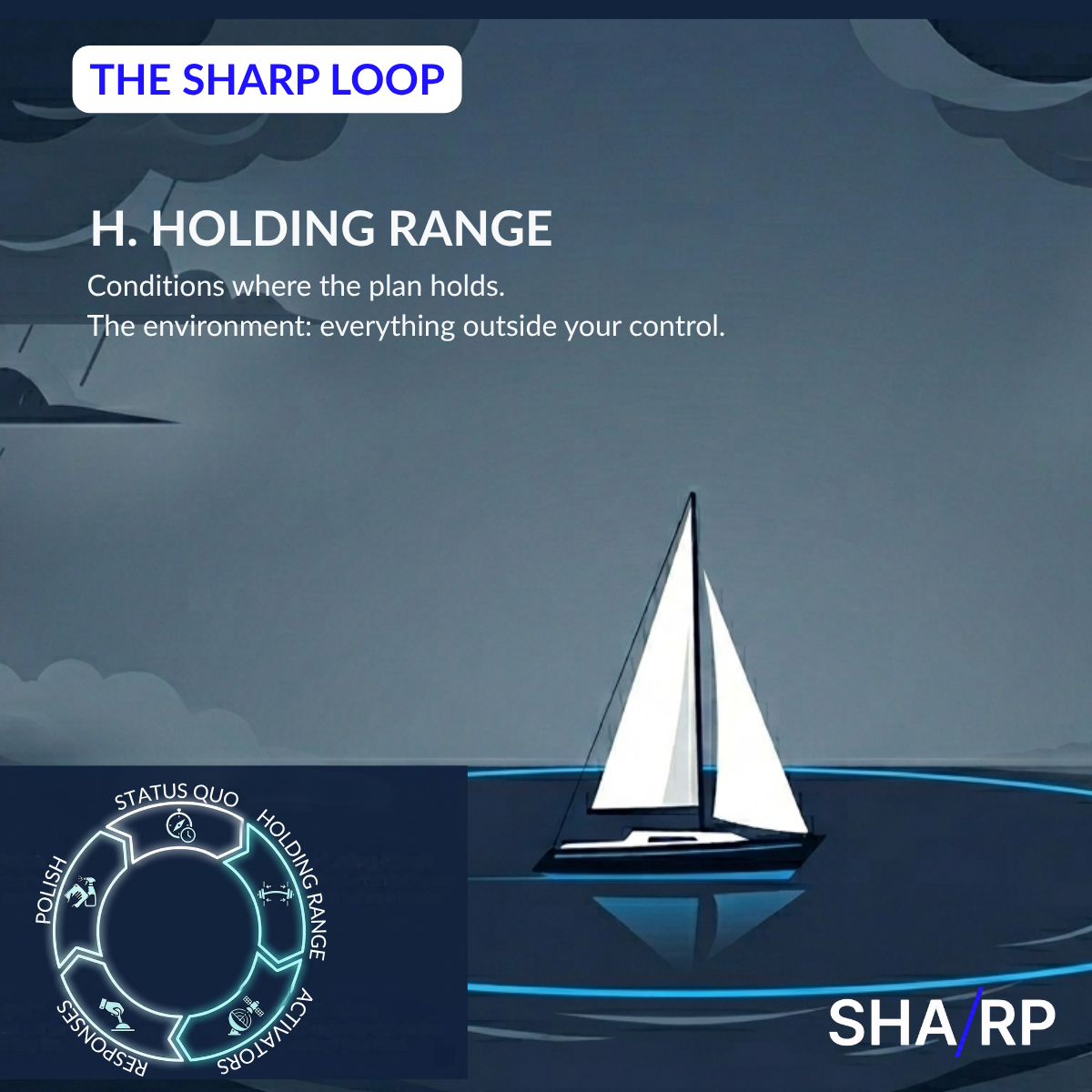
H is the holding range: how far can conditions shift before the plan breaks?
Most teams freeze here. Not because they're indecisive. Because no one has ever asked them that question before.
That freeze is the gap. And it's fixable.
Once it's written, the team stops asking. They know the criteria. The debate closes not because it was shut down, but because it was pre-answered.
A is for Activators
Every alert reopened the debate.
Stay or leave. Same question. Every week. Sometimes every day.
The decision had been made: stay, maintain routine, distance learning for the kids. Clear plan.
But "things keep changing" is not an activator. It's a feeling. And feelings aren't transferable. A partner weighs it differently. Parents call every morning. Every new alert puts the decision back on the table.
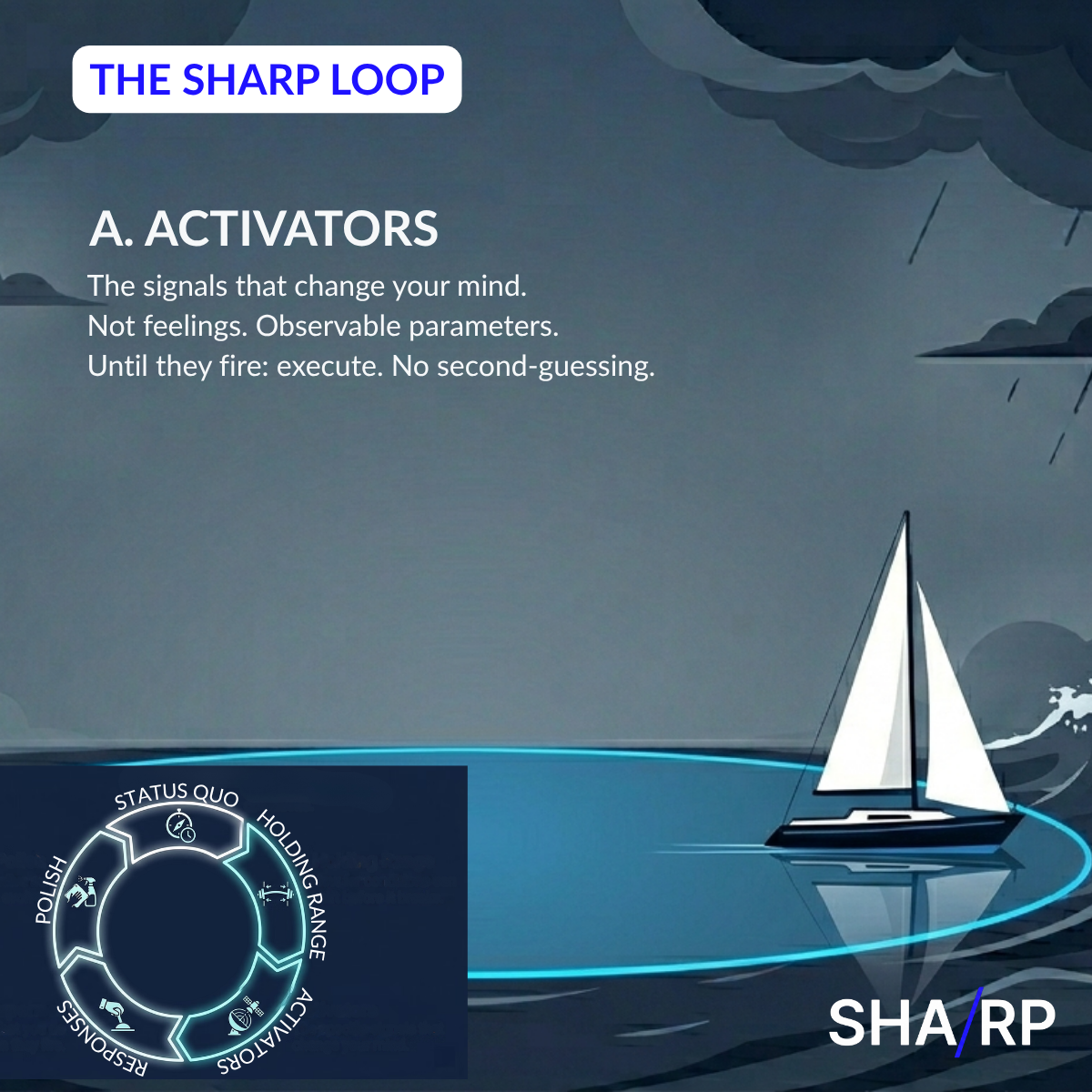
An activator is specific and observable. Anyone can check it without interpretation.
Not "if it feels more dangerous." Sustained reporting of deaths above the baseline rate. Confirmed damage to water or electricity supply.
Not a feeling. A condition you can look up.
Once the activators were written, the debate stopped. Not because anyone shut it down. Because it had been pre-answered. Six weeks of open conversation. Zero after that.
R is for Responses
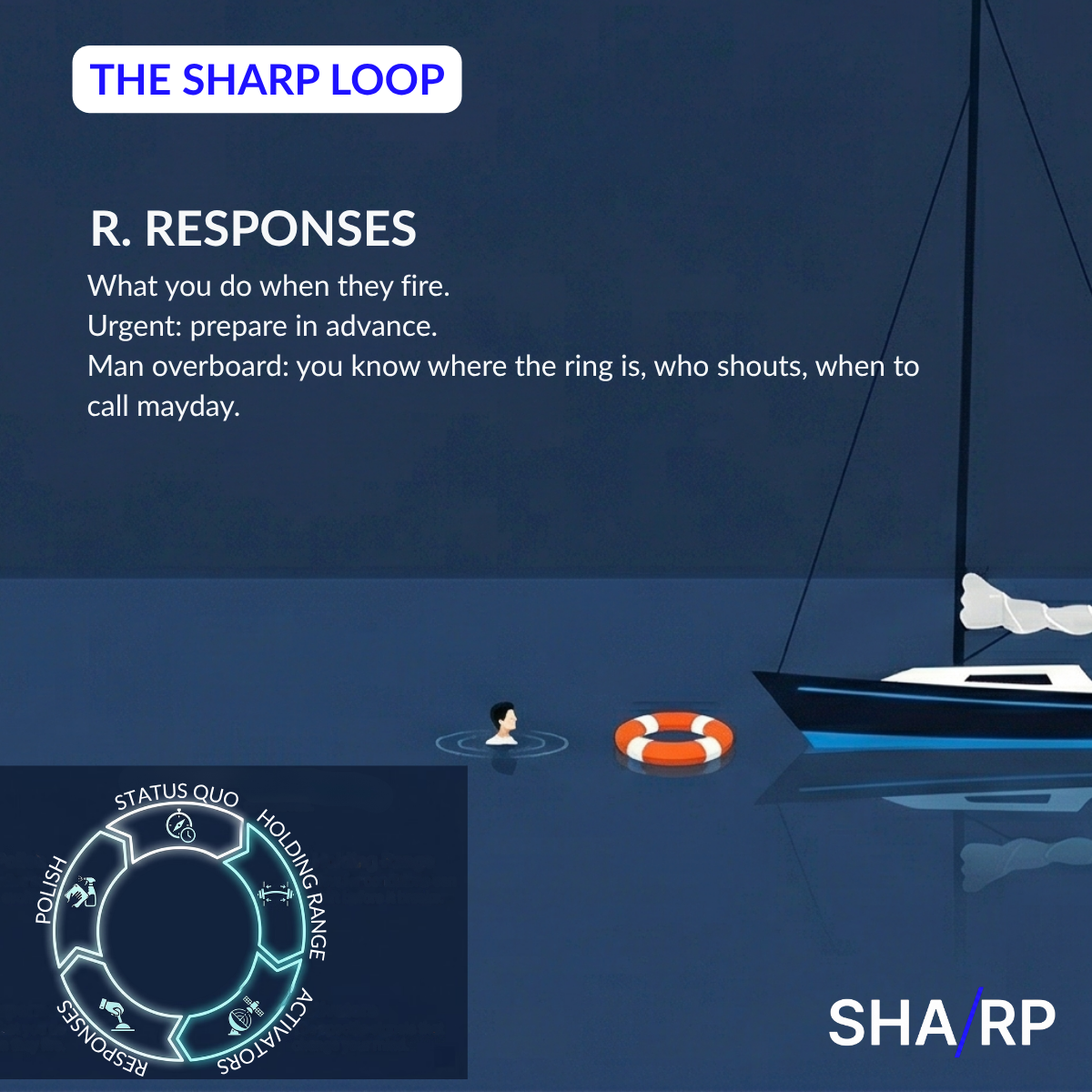
The deal hadn't closed. But the engineering lead had already run the estimate.
Not because they expected to build it. Because they might. And if the PO arrived, there would be a five-day window before the client expected a timeline. They wanted to walk in ready.
R is pre-decided. For each activator: what happens when it fires?
For non-urgent ones: note it, move on.
For urgent ones: the minimum required to act with confidence. Not a full plan, not a strategy session.
Here: tech lead pre-estimates during the proposal stage. High-level team allocation sketched in advance. Full replan deferred until the PO is signed.
Deal closes: three days already done, clear next step, client timeline met. Deal falls through: you spent an afternoon.
Minimum preparation. Scaled to urgency, not anxiety.
P is for Polish
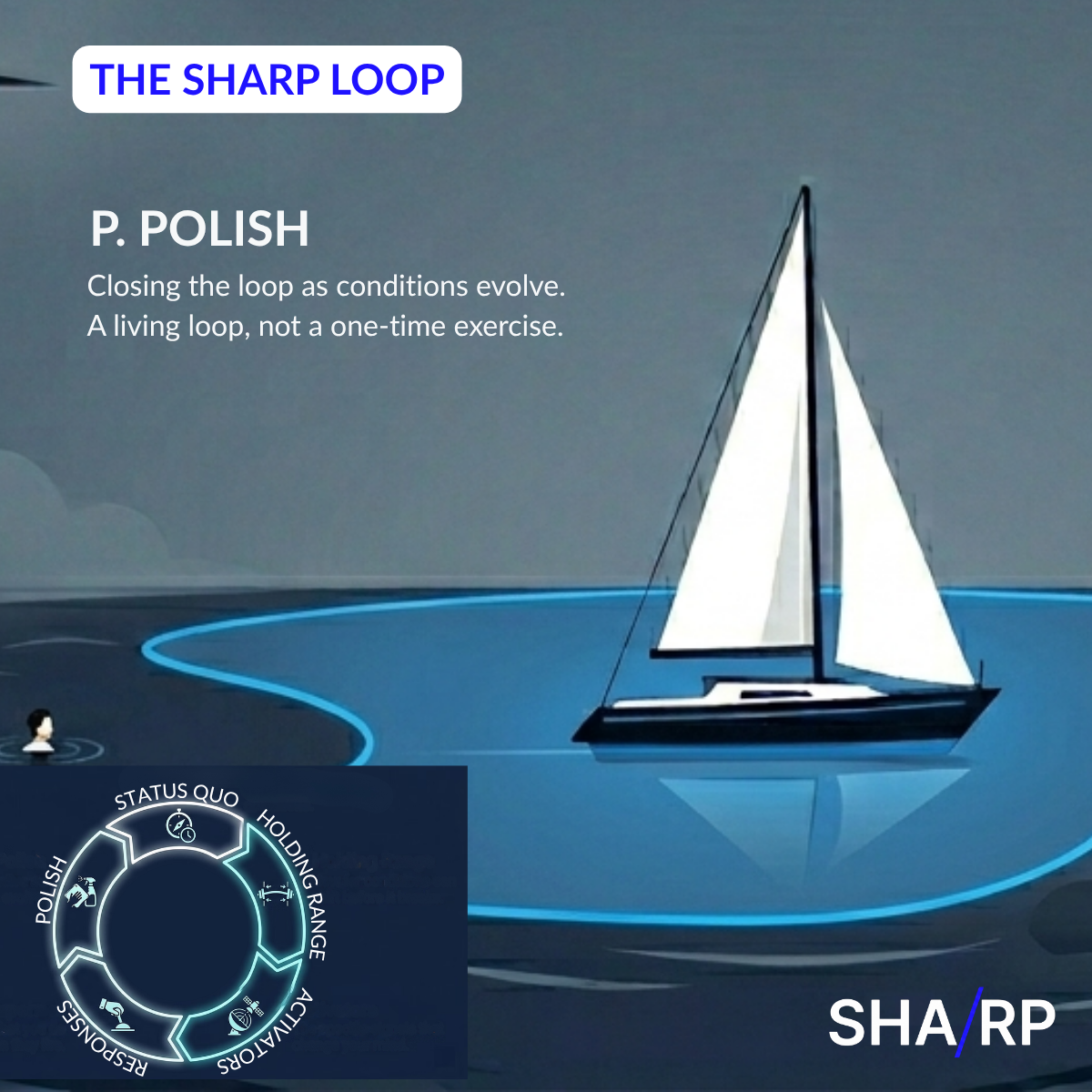
All three activators were set. None of them fired.
Technically safe. No casualties, infrastructure intact.
But something was wrong. Interception booms at 2am. Alerts through the day. Three weeks of broken sleep. Normal work: gone.
No activator covered it.
P is what you run when reality moves past the loop.
Specific cause: frequent alerts and booms at night made sleep and work impossible despite being safe. Fix: write the broader range.
New activator: any situation where normal functioning breaks down for several consecutive days, regardless of whether the other signals fired. Written. Decision: leave for two weeks, reassess on return.
The original activators weren't wrong. They just hadn't met that edge yet.
The gap P catches is always the situation nobody pictured when they built H.
The session behind the framework
Watch the 53 minute session
The whole loop walked through live, with two worked cases and a run-through with an attendee. Your email, and it opens on the page.
Watch the recordingThe tool behind the series
The SHARP Loop worksheet
Run the loop on your own situation: status quo, holding range, activators, responses, polish.
Open the worksheetRelated: Fractional CPO and go-to-market
Senior product and go-to-market leadership inside your team, for founders who need to move fast.
Fractional CPO and go-to-marketRead next
- Introducing The Security Diagnosis
SHA/RP's other services are fully custom. The Security Diagnosis is different. Fixed scope. Fixed price. Fixed output.
- You're Burning Runway Building for the Wrong Person
Most founders think they know who they're selling to. They're building features for the user. But the person who signs the check is optimizing for something different.
- A Well-Mannered Demo
Your POC ran on sample data, behind a firewall, and nobody tried to make it misbehave. That is not a security test.